


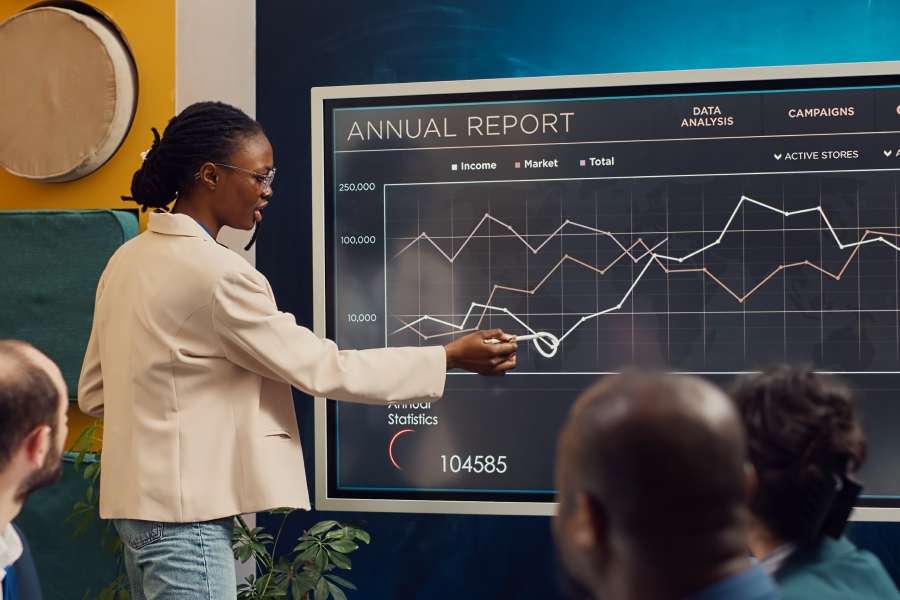
Every budget season, municipal utility staff face the same task: turning a year of billing, usage, and capital spending data into a rate-justification the utility board and city council can understand and approve. For a municipal utility, that process is different than for an investor-owned utility (IOU), as defined by the U.S. Energy Information Administration. IOU’s file with a state public utility commission (PUC) and go through formal proceedings which can take many months from filing to decision. A municipal utility instead builds its case for a local audience: a utility board or commission, and then the city council, often in meetings open to residents and the press.
What Goes Into an Annual Rate Justification
The justification for a proposed rate encompasses the utility’s full cost of service: operating and maintenance (O&M) expenses, debt service, depreciation, reserve targets, and a capital improvement plan. Staff need to show what the utility spent but also explain why costs may have changed, and how the proposed rate affects revenue. Many utilities also need to show the numbers broken out by customer class: residential, commercial, and industrial accounts often carry different cost-of-service profiles, and a council member reviewing the utility’s proposal will want to know how it impacts each class. If the utility is considering a change in rate structure, such as moving toward a tiered or seasonal rate, that will need to be factored in as well. Council members and the public are not utility finance professionals. The proposal and the justification must clearly show what the utility needs to spend, what the necessary revenue is, and what happens to service and reliability if there is a gap between the two.
Coordinating a Tight Budget Calendar
Finance staff are usually working backward from a council meeting date or a fiscal-year deadline, which means the rate case, annual budget, and the capital improvement plan all converge on the same timeline, often while staff are also closing out the prior year’s books and handling day-to-day billing. Late or incomplete data can set back the entire process, which also ratchets up the pressure.
Building the case also means pulling information from multiple departments. Engineering and operations know which capital projects are slipping or accelerating. Customer service knows how billing adjustments and payment plans affect collections. Finance manages cash flow and assets. When each department is working from its own spreadsheet or data export, reconciling numbers can take days and a subsequent change by one department can mean another round of changes for everyone. That’s why one shared system makes all the difference.
Where Budgeting Software Fits
This is where a true ERP (enterprise resource planning) system comes in. When numbers for the monthly board packet, the annual budget, and the rate case, all come from one system, staff spend less time reconciling numbers and more time explaining what the numbers mean to the people who approve them.
Once the case is built, it must be compiled in a thorough but concise report for stakeholders and decision makers. For more on this topic, see: Public Records and Transparency: What Utilities Need From Their Billing and Reporting Software.
Municipal utilities assessing their current systems should look for certain capabilities: historical billing and usage data that go back multiple years without a separate archive search; cost allocation that can be broken out by customer class across all services. Scenario modeling that lets staff test a rate change against different assumptions before it goes to the board is also important, as are consistent report formats that provide clarity and consistency.
Of course, no system replaces experienced staff and good judgment. But the right system does ensure accurate information in a timely fashion. Utilities preparing for budget season with the least stress are usually the ones with the right systems in place. The CentralView ERP system and Board Business products from Central Service Association provide everything municipal utilities need to meet the challenge.[1]
Schedule a Planning Conversation
The information presented in this article is intended for general educational purposes. Utility software environments vary significantly. We recommend consulting with a qualified technology advisor to evaluate solutions appropriate to your organization’s specific operational requirements.
[1] CentralView and Board Business are Central Service Association (CSA) Trademarks.